The Quiet Lie of Online Attention
We measure ourselves by numbers that come from moments nobody remembers.

Not everything that reaches people stays with them.
And I had to learn the difference the slow way.
I used to think numbers meant something. Not in a naive way, not like I believed every like was love or every view was connection, but there was this quiet translation happening somewhere in the background of my mind. More likes meant more interest, more interest meant more people cared, and if more people cared, then maybe I mattered a little bit more that day. It wasn’t dramatic or desperate, it was subtle, almost invisible, but it shaped how I interpreted myself more than I wanted to admit.
The internet didn’t force me into that thinking, it just made it feel natural. It gave me numbers for something that used to be abstract. Attention, curiosity, resonance, all of it became measurable. And once something becomes measurable, it becomes comparable, and once it becomes comparable, it starts quietly replacing your own judgment. Instead of asking was this true or did this actually say something, you start asking did this work. The number becomes the interpretation. The reaction becomes the meaning. And slowly, almost without noticing, metrics replace meaning.
At some point I noticed that I was no longer writing from myself as much as I was writing into a system. I wasn’t sitting with a thought and letting it develop, I was anticipating how it would land. I wasn’t asking what feels right, I was asking what will move. You don’t consciously decide to optimize, it just happens. You shorten things, simplify things, make them easier to process, faster to react to, easier to consume. And the system rewards you for it, which makes it even harder to question. You start to confuse clarity with compressing yourself into something quickly understandable.
But something about it started to feel slightly off. Not enough to stop, just enough to keep returning as a quiet discomfort. Because when I actually slowed down and asked myself what a like really is, the answer wasn’t as flattering as I wanted it to be. A like is not attention in the way we emotionally treat it. It doesn’t require focus or understanding. It doesn’t require presence. Most of the time it’s just a reflex, a small movement of a thumb inside a stream of constant motion. It’s not a decision in the way we pretend it is, it’s what happens when indifference pauses for a second.
A like is not interest. It’s the absence of skipping.
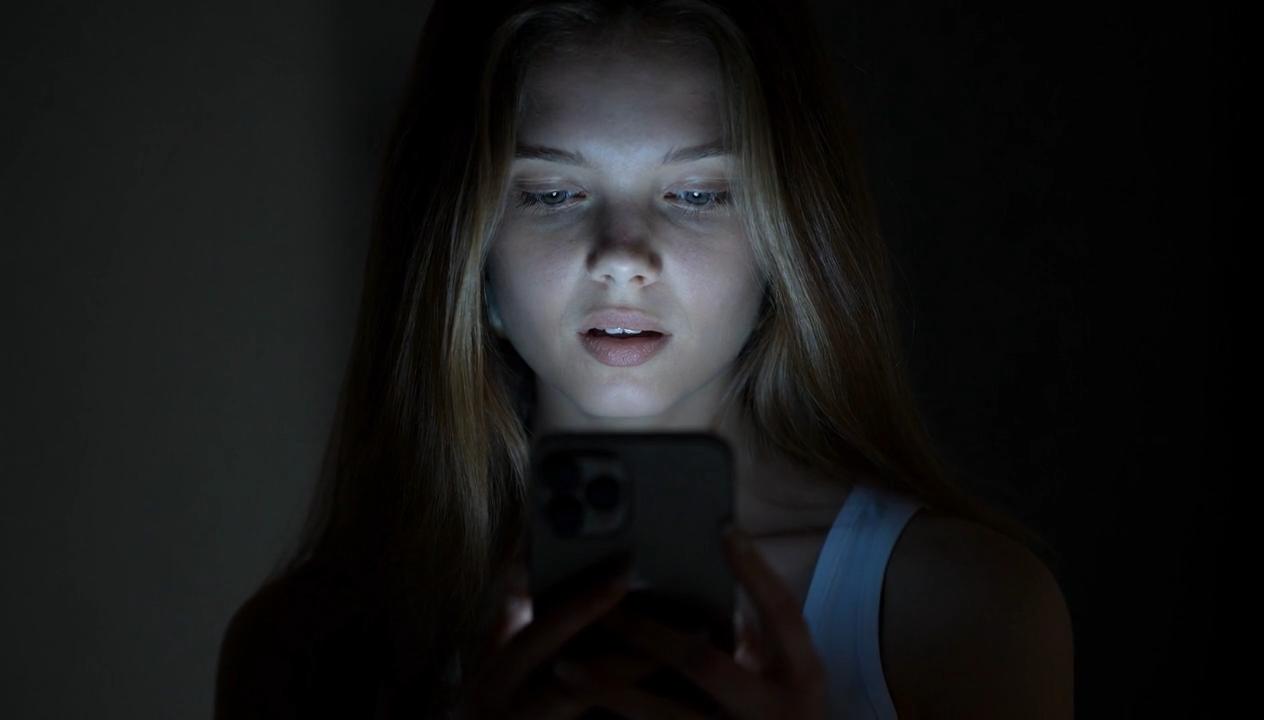
People don’t really engage with you online, they pass through you, and that’s not meant as criticism, it’s just the architecture. The feed is not designed for presence, it’s designed for continuity. It moves, and it keeps moving, and everything inside it is structured to support that movement. You open it and you are immediately inside something faster than your own attention span. You scroll not because you are deeply interested but because the system itself is built to keep you scrolling. You don’t sit with things, you don’t let them fully land, you react just enough to keep going. You don’t really experience content, you move through it.
Once I saw that clearly, I couldn’t really unsee it. Because if that’s the environment where my “attention” is coming from, then what am I actually measuring. Not depth, not understanding, not even real interest. I am measuring interruption. I am measuring how often I managed to exist in someone’s feed just long enough not to be skipped. I didn’t hold their attention. I interrupted their scrolling.
And if I’m honest, a lot of that attention happens in moments where people are not fully present. Moments where they are bored, distracted, waiting, filling space between things that actually matter. The internet is built on those in-between moments, and so is most of what we call engagement. Your content becomes part of someone’s background flow, not their focus. And that doesn’t make it worthless, but it does make it easy to overestimate what that attention actually represents.
Most people who liked you didn’t stay with you. They didn’t process you, they didn’t carry you forward, they didn’t remember you later that day. You were something that happened, not something that remained. You are not being deeply evaluated, you are being skimmed. You are not being remembered, you are being lightly registered. You are not competing with other people, you are competing with the speed of someone’s thumb. The feed doesn’t reward depth, it rewards not being skipped, and the easier you are to consume, the faster you are forgotten.
This becomes more complicated when you look at it through a feminine lens, because attention has never been neutral for women. We grow up with this subtle equation that being noticed means something about our value. Being seen feels like proof of something, even when we don’t consciously say it out loud. So when the internet gives us constant, low-effort attention, it’s very easy to mistake that for something deeper. It feels like validation, but it often has no direction, no intention, no continuity. It mimics being desired without requiring anyone to actually choose you.
And that’s where the distortion sits. Being looked at is not the same as being seen. Being reacted to is not the same as being understood. You can feel admired and still be completely invisible at the same time. You can have constant signals of attention and still have no one who could actually describe you beyond surface level. The feed rewards aesthetics, speed, and accessibility, but it doesn’t hold anything long enough to truly perceive it. You are visible inside something that cannot actually see you.
At some point I realized I didn’t want to measure myself through that kind of attention anymore. Not because it’s useless, but because it’s too easy to misinterpret. It’s too easy to build something fragile on top of it. So I started shifting toward something slower and more intentional, and that’s where writing started to matter differently.
Writing changes the rules in a way that is easy to overlook until you feel it. A like happens inside the feed, reading requires leaving it. That small difference is actually a threshold. To read something, you have to stop, you have to click, you have to open it, you have to give it a piece of your time. You have to allow it into your focus, even if just for a moment. That is already a different kind of action.
You don’t accidentally read someone.
If you clicked, you already did more than most people ever will. Not in a dramatic way, just in a real one. You made a small decision. You chose to stay, even briefly. That shift from reflex to intention is where attention becomes something else entirely.
Time is the only form of attention that can’t be faked. You can like something without really seeing it, you can scroll past something without remembering it, but you can’t read something without giving it at least a fragment of your actual presence. And that presence, even if it’s short, is real. A like is easy. Reading is a decision.
Writing introduces friction, and friction is what gives attention weight. The internet teaches us to remove friction, to make everything smoother and faster, but when it comes to meaning, friction is not a problem, it’s a filter. It separates reflex from intention, exposure from engagement, passing through from staying. And yes, that makes the audience smaller.
But smaller does not mean weaker. Smaller means more precise.
Fewer people are willing to leave the feed, fewer people are willing to slow down, fewer people are willing to engage with something that doesn’t immediately resolve into a reaction. But the ones who do are different in a way that matters. They are present. They stayed. And staying is the first real form of connection.
I realized that I don’t want to be scrollable in the way the feed demands. I don’t want to be something that can be fully consumed in half a second, reacted to, and forgotten before the next post loads. I want to be something you have to stop for, something that requires at least a small amount of presence. That naturally limits how many people will engage with it, but it also changes the quality of that engagement.
I am not optimizing for reach. I am selecting for attention.
The real audience begins where the feed ends. Not because the feed is bad, but because it’s built for movement, not for holding anything in place. Once you step outside of that movement, even briefly, something shifts. The interaction becomes less about reaction and more about interpretation, less about speed and more about attention.
This doesn’t mean likes are meaningless. It just means they are not what we often think they are. They are signals of interruption, not depth. They tell you that something caught someone’s attention for a second, not that it stayed with them. Once you understand that, they stop carrying emotional weight they were never designed to hold. You stop asking them to prove something about you, and you stop translating them into statements about your value.
Instead, you start asking a different question. Not how many people saw this, but who actually stayed.
Because staying is rare. Real attention, the kind that slows down and allows something to unfold, is rare. It requires time, and time is the one thing people don’t give lightly. And that’s exactly why it matters.
Maybe real attention was never meant to be scalable. Maybe we just adapted ourselves to systems that required it to be. Maybe depth doesn’t move the same way numbers do, and maybe that’s not a flaw but a boundary. Not everything meaningful can survive in constant motion. Some things require pause, and pause doesn’t spread the same way.
So maybe the goal is not to be everywhere or to reach everyone. Maybe the goal is to exist somewhere properly, to be met instead of just noticed, to be read instead of just liked. Because being seen inside something that never stops moving is not the same as being understood, and understanding is the only thing that ever actually leaves a trace.