You are not being seen. You are being sorted.
What survives online is not what is true, but what is compatible

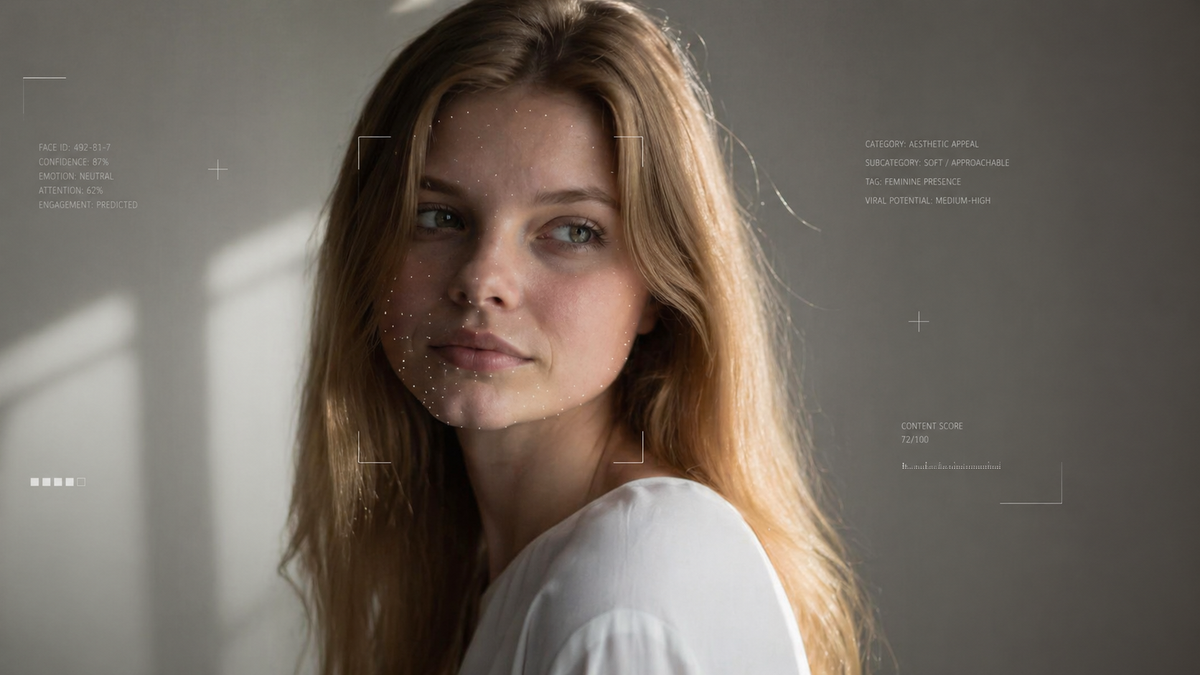
You think you are choosing how to present yourself. Most of the time, you are choosing what the system will allow to remain.
There is a version of the internet that still lives in how people talk about it, as if it already happened and settled into something understood, a moment where visibility became accessible and identity detached itself from permission, where appearing no longer required selection and where being seen felt like a direct extension of being present. It is remembered as a flattening of structure, as if attention reorganized itself into something neutral, something that simply reflects what exists, something that does not intervene. But reflection was never the function, and what replaced the old gatekeepers was not the absence of control but its transformation into a system that does not interrupt you, does not block you, does not even oppose you, and because it does none of these things it becomes much harder to recognize that it is there at all. What it does instead is decide what continues, and that distinction between being allowed to exist and being allowed to circulate is where everything begins to shift, because circulation is what converts presence into reality and what is repeated long enough becomes indistinguishable from what is true, while what is not repeated does not resist or protest or accumulate weight, it simply remains outside of the visible layer where it cannot shape anything.
This is why the system does not need to silence anyone, because silence would be noticeable and therefore questionable, and instead it relies on selection, and selection operates without friction, without any moment where you feel stopped or redirected, because you can still say anything, show anything, construct any version of yourself without interference. Nothing is removed, nothing is denied, the space remains open in appearance, and because it feels open it becomes easy to assume that whatever rises within it is the result of natural resonance, of people choosing freely what they respond to. But what feels like resonance is often nothing more than legibility, and legibility is not about truth or depth but about how quickly something can be understood, how efficiently it can be processed, how easily it can move through the environment without slowing it down. The system privileges signals that do not require interpretation, that do not introduce friction, that can be recognized instantly and repeated without effort, not because they are inherently better but because they are structurally compatible with the speed of attention.
This is where identity begins to bend, not abruptly and not in a way that can be easily named, but through small adjustments that feel like refinement rather than compromise, because you begin to notice patterns in what moves and what stays still. A certain softness holds attention without creating discomfort, a certain form of vulnerability invites response without destabilizing the viewer, a certain balance between openness and control allows you to be seen without becoming difficult to process. None of this is explained to you, and there is no instruction to follow it, but the feedback loop makes it visible, and over time you begin to adjust, first consciously and then without thinking, because the distinction between experimentation and alignment dissolves. It feels like developing a voice, like becoming clearer, like finding a way to express yourself more effectively, but clarity here is already shaped by what the system can carry forward, and what cannot be carried forward begins to feel unnecessarily heavy even when it is precise.
So you simplify, not out of desire to reduce yourself but because reduction increases movement, and movement begins to matter more than completeness, because what does not move does not accumulate presence and what does not accumulate presence does not exist in the same way. You structure your expression so it travels more easily, so it requires less from the outside, and over time you begin to anticipate how something will land before you even articulate it, and that anticipation becomes instinctive. From the outside this reads as authenticity, as a coherent identity, as a recognizable voice that others can connect to, but within that coherence there is a continuous alignment with what survives. Survival in this environment is not about being correct or even being understood in depth, it is about being compatible with the conditions of distribution.
The system does not punish complexity, it simply does not extend it, and without extension complexity becomes invisible, not because it disappears but because it never reaches the threshold where it can shape perception. This is where silence begins to operate as pressure, because silence online is not neutral, it is interpreted as absence, as a signal that something is not working, that something about your expression does not fit, and because there is no visible force behind that silence it becomes easy to internalize it as a personal misalignment rather than a structural limitation. You adjust again, slightly, almost imperceptibly, closing the distance between what you are and what is recognized, shifting tone, adjusting pacing, calibrating how much you reveal and how directly you speak, and each adjustment increases visibility while also narrowing the range of what remains visible.
Over time, visibility becomes confirmation, growth becomes validation, and repetition becomes indistinguishable from truth, because what is seen repeatedly begins to define what is real, not because it is more accurate but because it is more present. The system becomes self-reinforcing, rewarding patterns that are already known to perform and encouraging their continuation, not through imitation but through convergence, where different individuals arrive at similar expressions because those expressions are the ones that survive. The range remains wide enough to maintain the illusion of individuality, but narrow enough to preserve structural stability, and femininity online begins to take on a recognizable form, not identical but aligned, soft but not passive, expressive but controlled, visible but not disruptive, existing within boundaries that are rarely encountered as limits because they are rarely approached directly.
You do not feel constrained, because nothing is stopping you, and instead you feel guided, and guidance is easier to accept, especially when it produces results. This is what makes the system effective, because it does not rely on force, it relies on reward, and in doing so it shapes behavior without ever needing to impose it. Everything that does not align remains present but outside the layer where presence becomes influence, and over time what exists outside that layer loses relevance, not because it lacks value but because it lacks visibility, and without visibility it cannot accumulate recognition or enter shared perception or redefine what is possible.
This is how identity becomes selective, not in what you are but in what is allowed to remain visible, because there is always more beneath the surface, more complexity, more contradiction, more depth that does not translate easily into the structures that the system favors. What does not translate becomes difficult to sustain, not because it is rejected but because it is not reinforced, and what is not reinforced requires effort, and effort shifts toward what is rewarded. This shift is gradual and largely invisible, redistributing attention within yourself so that the parts of you that move more easily begin to take precedence, not because they are more important but because they are more present, while the rest remains intact but unexpressed, existing outside of the visible layer.
This is why the illusion of freedom persists, because nothing is taken from you, nothing is forbidden, you retain the ability to express anything, to construct any version of yourself, to move in any direction, but the environment determines what continues and what fades. You are free to speak, but not everything you say will exist in the same way, because some expressions will circulate and accumulate and shape perception while others will remain isolated and eventually disappear from the shared space, not because they are less true but because they are less compatible with the system that distributes attention.
And once this becomes intuitive, even without being fully articulated, your relationship to yourself begins to shift, because you start to anticipate what will survive, and you begin to shape yourself in advance, not out of a desire to perform but out of a need to remain present within the space that defines relevance. This is where the boundary between expression and adaptation becomes difficult to locate, because the process is continuous and without clear markers, and you are not being forced into a role but gradually selected into one, and the longer you remain within it the more natural it feels, the more it aligns with how you see yourself, the more it replaces the need to question it.
The system does not need to convince you, it only needs to sustain you, because once your presence depends on its logic and your visibility is tied to its patterns it no longer needs to impose anything. You will carry the structure forward yourself, and this is where control becomes indistinguishable from choice, because you are still choosing, but you are choosing from within a space that has already defined what will remain. The algorithm does not decide who you are, it decides what survives long enough to become you.
You can’t step outside the system entirely. That’s not the point, and pretending otherwise only creates another illusion to live inside. What you can do is notice the difference between what you are and what is being extended, because that difference is where your actual autonomy still exists. Most people never look there. They stay inside what works, inside what circulates, inside what confirms them back to themselves.
You don’t have to reject visibility, and you don’t have to disappear to remain intact, but you do have to understand the structure you are moving through, otherwise it will define you quietly, without resistance, without conflict, in a way that feels natural enough to never question. Once you see it, you don’t become free from it, but you stop confusing survival with truth, and that alone changes how much of you you are willing to reduce just to remain visible.