Maybe We Are Not Healing. Maybe We Are Hiding.
We inherited more freedom than almost any generation before us, and somehow learned to explain our avoidance so beautifully that it almost looks like wisdom.

The best excuses are never completely false. They contain just enough truth to protect the lie living inside them.
I had a thought recently that made me uncomfortable, and I have learned not to run too quickly from thoughts like that. Not because every uncomfortable thought is wise. Some are just ugly. Some are immature. Some are fear wearing intellectual clothing. But some of them arrive with a strange little sting because they are touching something true, something we would rather decorate than face. The thought was this: if I had been born a hundred or two hundred years earlier, my life would not have waited for me to feel ready.
At my age, I might already have been married for years. I might have had a second child on my hip, a tired body, rough hands, and no delicate little crisis about whether I had found myself yet. There would have been no endless soft season of becoming, no perfectly worded explanation of my emotional unavailability, no month-long spiral over whether I was “aligned” with the basic tasks of life, no carefully curated identity assembled out of playlists, saved posts, therapy language, personality tests, and postponed decisions. Life would have arrived early, brutally, publicly, and without asking for my consent in any meaningful sense.
And before anyone decides to misunderstand me, no, I am not romanticizing that world. I do not want to live in a time where a woman’s life is decided before she can speak for herself. I do not want marriage to be an economic sentence. I do not want motherhood forced by expectation. I do not want obedience mistaken for femininity. I do not want a life made smaller because the past could not imagine women as full human beings. I am grateful to be alive now. Deeply grateful. I am grateful for choice, education, privacy, contraception, bank accounts, divorce, work, travel, movement, speech, and the right to refuse a life that does not fit me. I am grateful that my body and future are not supposed to belong automatically to a husband, a family, a village, a church, or a tradition that never asked what kind of person I wanted to become. But maybe that is exactly why our current fragility bothers me so much. Because we have more freedom than most women before us could have imagined, and still, somehow, ordinary adulthood often feels like too much.
We are educated, connected, informed, entertained, medicated, therapized, coached, validated, and algorithmically comforted from every possible direction. We have access to more knowledge in one afternoon than many people once had in a lifetime. We can learn almost anything. We can leave bad rooms. We can speak publicly. We can build businesses, identities, friendships, relationships, careers, archives, audiences, and entire worlds from a device small enough to hold in one hand. And yet so many of us are overwhelmed by the basic shape of life. We live with our parents as long as possible and call it strategy. Sometimes it is. The economy is not gentle, and pretending that rent is easy is just cruelty with a spreadsheet. But sometimes staying home is also fear wearing practical clothes. We avoid commitment and call it protecting our peace. Sometimes it is. Some commitments really are traps. But sometimes it is just an elegant refusal to be accountable to another person. We delay work, discipline, love, risk, discomfort, decision, movement, and responsibility, then stare at the emptiness and wonder why freedom feels so strangely hollow.
I am not writing this from outside the room. That would be too easy, and probably dishonest. I recognize the comfort in myself too. I know how quickly one avoided task can become a theory about why the world is impossible. I know the seductive little pleasure of postponing something while making the postponement sound emotionally intelligent. I know how good it feels to say “I am not ready” when the more humiliating truth is “I am afraid to be responsible for the result.” That is what makes this uncomfortable. Not that I can point at “our generation” from a safe distance. I cannot. I am inside it. I speak its language. I know its excuses because some of them have lived in my own mouth.
We say we want independence, but we panic the moment independence feels lonely. We say we want meaningful work, but we resent repetition, hierarchy, boredom, early mornings, feedback, deadlines, and the fact that skill is usually built through unglamorous practice. We say we want love, but we want it without inconvenience, without compromise, without being seen in all the ordinary disappointing ways humans are seen when they stop performing and start living together. We say we want a real life, but we keep refusing the ordinary sacrifices that make a life real. And maybe this is the sentence we hate because it sounds too simple, too brutal, too unfair, too much like something said by someone who does not understand complexity: some of us are lazy. Not everyone. Not always. Not as an identity. Not as a moral death sentence. But often enough that the word deserves to come back into the room.
Sometimes we are not healing; we are hiding. Sometimes we are not burned out; we are undisciplined. Sometimes we are not protecting our peace; we are protecting our comfort. Sometimes we are not waiting for the right moment; we are avoiding the moment when our lives become our own fault. That is the part no one wants to say out loud, because modern language has made avoidance beautiful. We have learned to explain our weaknesses so fluently that they almost look like wisdom. We can make almost any refusal sound morally elevated if we phrase it correctly. Quitting becomes “choosing myself.” Ghosting becomes “honoring my energy.” Avoidance becomes “boundaries.” Emotional laziness becomes “not owing anyone access.” Fear becomes “intuition.” Chronic inconsistency becomes “being in my season.” Passivity becomes “surrender.” The inability to tolerate ordinary frustration becomes “protecting my nervous system.”
The dangerous thing is that none of these phrases are always false. That is what makes them so useful. A boundary can be real. Rest can be necessary. Trauma can shape behavior. The nervous system is not imaginary. Burnout is not fake. Some people really do need to leave, pause, recover, soften, grieve, heal, and rebuild themselves from the inside out. But the best excuses are never completely false. They contain just enough truth to protect the lie living inside them. A boundary is supposed to protect your dignity, not excuse your inability to communicate. Self-care is supposed to restore your capacity, not become a lifestyle of refusing difficulty. Healing is supposed to make you more capable of love, work, courage, honesty, and responsibility, not less. Peace is not meant to be a padded room where nothing can ever disappoint you. Peace is something you build inside yourself so you can meet life without collapsing every time it asks something from you.
We talk a lot about softness now. I understand why. A lot of people are tired of being praised only when they are useful, quiet, attractive, productive, agreeable, and endlessly available. Women especially have inherited generations of emotional labor disguised as virtue. We know how easily “strength” becomes a word used to demand more suffering from people who are already exhausted. We know that survival is not the same as flourishing. So yes, I believe in softness. I believe in rest. I believe in tenderness. I believe in nervous systems. I believe in the right to refuse a life built entirely around endurance. But softness without strength becomes helplessness. Rest without responsibility becomes decay. Freedom without discipline becomes drift.
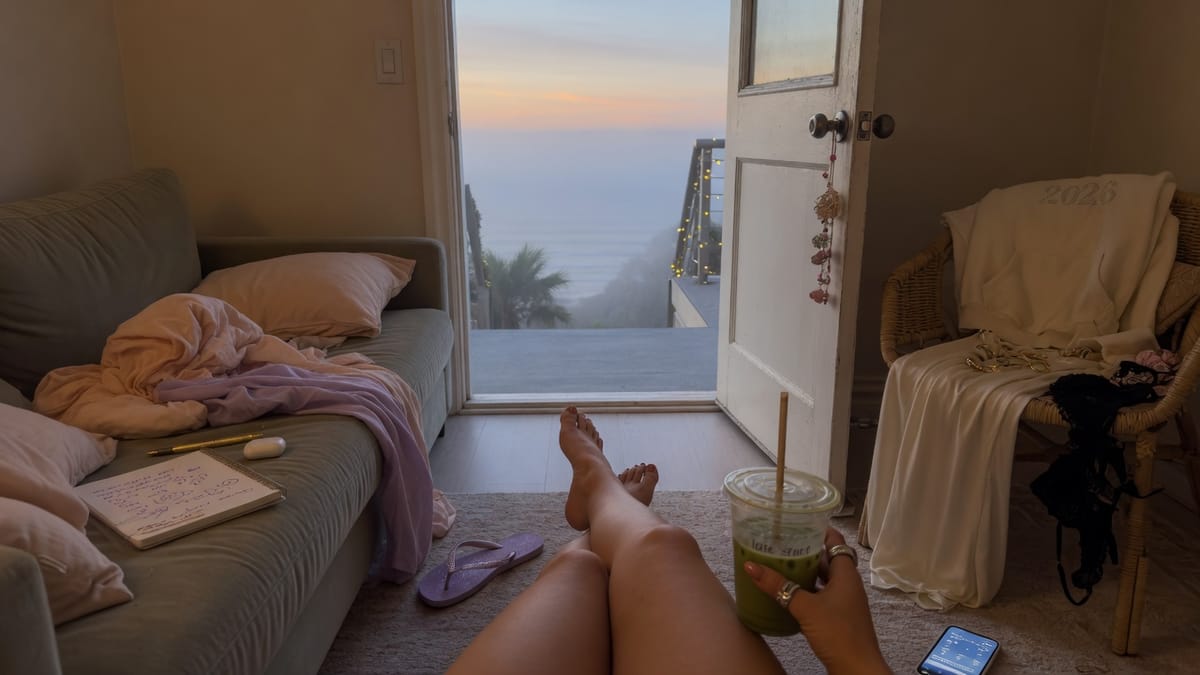
And drift is everywhere. It is in the unanswered message sitting there for five days while we tell ourselves we are overwhelmed, even though we have had enough energy to scroll for hours. It is in the online course we bought because we were becoming a new person, left permanently unfinished in a browser tab among twenty-three other versions of ourselves. It is in the bedroom that looks aesthetic in photos but quietly hides a life we cannot maintain. It is in the weekly ritual of deciding that Monday will finally be the reset, then treating Monday like an emotional hate crime when it arrives. It is in the way we can explain every pattern we have and still repeat it with impressive loyalty. We are becoming people who know the language of transformation better than the practice of it.
That is maybe one of the most modern tragedies. We are not stupid. We are not unaware. In some ways, we are too aware. We can name everything: attachment style, burnout cycle, trauma response, dopamine loop, avoidant pattern, parent wound, emotional labor, executive dysfunction, overstimulation, dissociation, capitalist exhaustion, patriarchal conditioning, algorithmic dependency. We can map the prison beautifully. We can describe the bars in perfect detail. Then we stay inside.
Self-awareness is not transformation. It is only the first honest room. Knowing why you avoid responsibility does not make you responsible. Knowing why you fear commitment does not make you loving. Knowing why you procrastinate does not finish the work. Knowing why you are fragile does not make you strong. At some point, insight has to become behavior. Otherwise it is just decorative intelligence. And we have a lot of decorative intelligence now: people who can critique society but cannot keep a promise to themselves, people who can discuss emotional labor but cannot send a direct message, people who can identify every harmful system but have no personal system for getting up in the morning, people who can write paragraphs about liberation while being quietly enslaved to impulse, comfort, attention, and avoidance.
I know that sounds harsh. It is harsh. But I do not think harshness is always cruelty. Sometimes it is respect. Sometimes telling people they are capable of more is not contempt, but belief. I do not think our generation is stupid, doomed, or uniquely weak by nature. I think we are overstimulated, yes. Atomized, yes. Economically squeezed, yes. Raised inside comparison machines, yes. Trained to perform identity before we had time to build character, yes. But I also think we are intelligent, sensitive, observant, creative, emotionally literate, and capable of building lives with more honesty than many people before us were allowed to have. That is exactly why the excuses are not good enough.
The world being unfair does not absolve us from becoming capable inside it. The economy being cruel does not excuse every private collapse of discipline. Trauma explaining something does not automatically justify preserving it forever. Mental health matters, but it cannot become a permanent alibi for refusing growth. Not everyone has the same starting line, but most of us still have some next step we are avoiding. There is always something to blame: the system, our parents, capitalism, the patriarchy, school, trauma, timing, mental health, the housing market, the job market, the dating market, social media, the algorithm, bad role models, bad luck, bad people, bad politics, bad everything. And some of it is real. Some of it breaks people. Some of it matters more than motivational people want to admit. But not everything that challenges us is oppression. Not everything uncomfortable is trauma. Not every expectation is violence. Not every difficult conversation is unsafe. Not every obligation is exploitation. Not every hard season is evidence that we are on the wrong path. Sometimes discomfort is the entrance fee. Sometimes life is simply asking us to grow, and we are offended by the request.
That may be the most modern reaction of all: offense at the idea that we should become stronger. We accept strength as an aesthetic. We like it in captions, gym mirrors, elegant independence, calm facial expressions, “main character energy,” expensive coffee, clean apartments, and women who look beautifully unbothered. But actual strength is mostly invisible and inconvenient. It is doing what you said you would do. It is apologizing without turning yourself into the victim. It is waking up when disappearing would feel easier. It is staying consistent after the mood has gone. It is learning a skill badly before you can do it well. It is being misunderstood without instantly performing your pain for sympathy. It is making a decision and accepting that every chosen life contains grief for the lives not chosen.
We are not very good at that grief anymore. We want every door open, every identity available, every possible future preserved. We want to remain flexible, undefined, available, uncommitted, untouched by the cost of our own choices. We want to be writers without finishing the essay, artists without making bad work, adults without leaving the nest, lovers without being accountable, independent women without the loneliness and responsibility independence sometimes brings. But an unchosen life is not freedom. It is just a slow leak of time. Potential is beautiful when you are young. After a while, it becomes embarrassing. Not because people must achieve some conventional milestone by a certain age, but because unused capacity begins to rot. There is a particular sadness in watching intelligent, sensitive, capable people stay permanently unfinished because finishing anything feels too limiting. Starting lets you remain in fantasy. Finishing reveals the actual quality of your effort.
So we start. We announce. We prepare. We research. We save inspiration. We buy the notebook. We make the playlist. We create the account. We plan the routine. We imagine the new self. Then the boring part arrives, and suddenly we need rest, clarity, healing, better timing, a different environment, a cleaner system, a new identity, a new theory, a new Monday. The fantasy version of ourselves is always disciplined. The real one has to answer emails.
That is where adulthood becomes humiliating. Not in the grand tragedies, but in the ordinary repetitions: laundry, money, work, dishes, sleep, apologies, groceries, exercise, cleaning, showing up, replying, trying again, repairing, choosing, continuing. Nobody claps for the maintenance of a life, yet without maintenance there is no life, only aesthetic fragments arranged around private chaos. Maybe that is why we keep escaping into explanation. Explanation feels intelligent. Maintenance feels boring. Explanation gives us identity. Maintenance gives us evidence. Explanation can be performed. Maintenance can only be lived.
Our ancestors had fewer choices and somehow built entire lives. They built families, farms, kitchens, shops, traditions, songs, rituals, homes, communities, habits, and survival systems under conditions most of us would find unbearable for a week. Again, not because the past was morally superior. It often was not. It was cruel, narrow, violent, unfair, and especially brutal to women, poor people, queer people, disabled people, and anyone who did not fit the expected shape. But the past understood something comfort has made us forget: life is not waiting for your ideal emotional state. You can be afraid and still work. You can be tired and still show up. You can be uncertain and still choose. You can be wounded and still refuse to become useless. You can be sensitive and still become strong. You can reject suffering as an identity without rejecting responsibility as a practice.
This is not an argument for returning to the past. I do not want the old scripts. I do not want women valued only through marriage, motherhood, service, silence, beauty, sacrifice, or obedience. I do not want young people crushed by economic systems and then lectured about discipline by people who bought houses with luck and timing. I do not want the language of resilience used to excuse injustice. But I also do not want modern freedom to become a prettier cage. Because there is a version of liberation that is secretly just drift. It says: no one can tell me what to do. Fine. But then what will you do? It says: I reject old expectations. Good. But what new standard will you live by? It says: my life belongs to me. Exactly. So why are you treating it like something you found on the floor and can replace later?
Freedom is not an aesthetic. Freedom is not sleeping late, avoiding pressure, collecting diagnoses, posting about boundaries, and calling every difficult thing toxic. Freedom is the terrifying privilege of having fewer people to blame forever. Nobody is forcing us into one script anymore. Good. But that means we have to write one. Not a perfect one. Not a traditional one. Not a socially approved one. But something. A rhythm. A direction. A structure. A set of values that survive contact with inconvenience.
This is where I think many of us secretly fail. Not in our beliefs, but in our stamina. We believe in autonomy, but we do not always practice responsibility. We believe in self-expression, but we do not always build skill. We believe in mental health, but we do not always change the habits destroying it. We believe in love, but we do not always become trustworthy enough to receive it. We believe in freedom, but we often lack the discipline to use it without dissolving. Freedom without discipline does not feel like liberation for long. It starts to feel like fog: too many choices, no direction; too much language, no action; too much awareness, no transformation; too much selfhood, no character.
Character is an unfashionable word now. It sounds old, strict, almost embarrassing. But I think we need it. Not in the moralistic sense of being respectable, obedient, polished, and approved by people who confuse control with virtue. I mean character as inner architecture: the part of you that remains when mood changes, the part that can be trusted when no one is watching, the part that decides what you do with your freedom. Because without character, freedom becomes consumption. You do not choose a life. You browse through versions of one. You collect ideas, aesthetics, relationships, identities, opinions, and possibilities, but nothing roots. Nothing deepens. Nothing asks enough of you to make you real.
Maybe that is why so many people feel unreal now. We are visible, but not necessarily known. Connected, but not necessarily held. Informed, but not necessarily wise. Emotionally literate, but not necessarily emotionally mature. Free, but not necessarily capable. We know how to appear as people. We are less practiced at becoming them. This is not only a personal failure. The modern world profits from our fragmentation. It wants us distracted, anxious, lonely, comparing, buying, scrolling, optimizing, restarting, and never quite satisfied. It sells us identities faster than we can build lives. It rewards performance more than depth. It makes even healing into content, even rest into branding, even rebellion into an aesthetic category. But knowing that is not enough. At some point, blaming the machine while feeding it your entire attention becomes another form of surrender.
We have to stop pretending that critique is the same as freedom. You can know exactly how the system manipulates you and still be manipulated by it every day. You can understand the algorithm and still give it your mornings. You can hate capitalism and still let consumption become your personality. You can resent beauty standards and still organize your worth around being seen. You can despise productivity culture and still avoid the kind of disciplined work that would actually make you independent. Contradiction is human. But permanent contradiction becomes character too.
That is the uncomfortable thing: we are always practicing something. Even avoidance is practice. Every unanswered message practices avoidance. Every abandoned project practices quitting. Every broken promise to yourself practices self-distrust. Every hour of numb scrolling practices passivity. Every time you call fear “intuition” without examining it, you practice cowardice with prettier lighting. And every small act in the opposite direction matters too: answering directly, cleaning the room, finishing the draft, going to work, taking the walk, saying sorry, asking clearly, saving money, learning the boring skill, telling the truth, keeping the promise, choosing the harder dignity over the easier excuse. This is not glamorous. That is why it works.
A lot of real life is not cinematic. It is not a revelation, a breakthrough, or a perfectly lit morning where you finally become the person you imagined. It is repetition until your life starts trusting you again. Maybe adulthood was never supposed to feel like constant self-expression. Maybe adulthood is the part where your inner world stops being the most important thing in the room every second. Maybe it is the part where you learn that your feelings matter deeply, but they are not always instructions. Maybe it is the part where you stop asking life to feel gentle before you participate in it.
Maybe becoming capable was always supposed to hurt a little. Not destroy you. Not erase you. Not make you hard in the ugly way. But stretch you. Expose you. Embarrass you. Interrupt your fantasy of yourself. Force you to meet the difference between the person you describe and the person you actually are. That difference is painful. It is also where growth begins.
There is a kind of shame we should reject completely: the shame that tells people they are worthless, broken, unlovable, dirty, behind, failed, or too late. That kind of shame poisons. It does not build anything. But there is another discomfort that is not poison. It is conscience. It is the quiet inner alarm that says: you are wasting something. You are making yourself smaller than you need to be. You are using language to hide from action. You are calling this softness, but it is surrender. You are calling this freedom, but it is drift. You are calling this healing, but you have built a home inside the wound. We should not run from that discomfort too quickly.
Maybe our generation does not need another excuse. Maybe we have enough language now. Enough frameworks. Enough diagnoses. Enough discourse. Enough posts explaining why everything is difficult. Enough analysis of the prison. Enough aestheticized exhaustion. Enough beautiful descriptions of paralysis. Maybe we need a mirror. Not a cruel mirror. Not one that says everyone should become traditional, married, rich, productive, religious, emotionless, or obedient. A clearer mirror. One that says: you are freer than many people before you, and that freedom is not a decoration. You do not have to follow the old script, but you do have to write something. You do not have to become who society wanted, but you do have to become someone. You do not have to suffer pointlessly, but you do have to stop treating every difficult thing as an injustice.
You are allowed to rest without disappearing forever and calling it healing. You are allowed to be afraid without building an entire personality around avoidance. You are allowed to reject the past without wasting the future. Maybe that is the real adulthood our generation has been circling. Not marriage by twenty. Not children because everyone expects it. Not a job that drains the soul. Not obedience. Not productivity as religion. Not some polished life built for approval. But the quieter, harder thing: becoming someone who can be trusted with her own freedom, someone who can choose, carry, stay, leave, repair, begin, finish, and tell the difference between softness and surrender.
I think often about the women before us. Not sentimentally. Not as saints. Not as an argument that we should suffer because they suffered. I think about them as evidence of capacity. Many of them had less permission and more burden. Many were denied the right to become fully themselves. Many were trapped, used, silenced, overworked, underestimated, and remembered only in relation to others. So what do we do with the freedom they did not have? Do we use it to become more alive, more capable, more honest, more skilled, more courageous, more difficult to own? Or do we use it to stay in bed, avoid decisions, outsource blame, and call every demand on our character a threat to our wellbeing?
I know my answer will not always be perfect. I know I will still avoid things. I will still dress up fear in clever language sometimes. I will still choose comfort when I know discipline would respect me more. I will still need rest, softness, forgiveness, and gentleness. But I do not want to build a whole life around the parts of me that are afraid to grow. I do not want to be beautifully unfinished forever.
That, maybe, is the line. Not perfection. Not hardness. Not relentless self-improvement until there is no tenderness left. Just the refusal to make a religion out of avoidance. The refusal to confuse explanation with transformation. The refusal to inherit freedom and turn it into a waiting room. We are not living a hundred years ago. Nobody is coming to arrange our lives for us. Nobody is forcing us into adulthood at sixteen. Nobody is handing us one script and saying this is all you are allowed to be. Good. The door is open. And at some point, not walking through it becomes a choice too.