The Songs We Loved Before We Understood Them
On streaming, inherited nostalgia, and the strange danger of beautiful surfaces

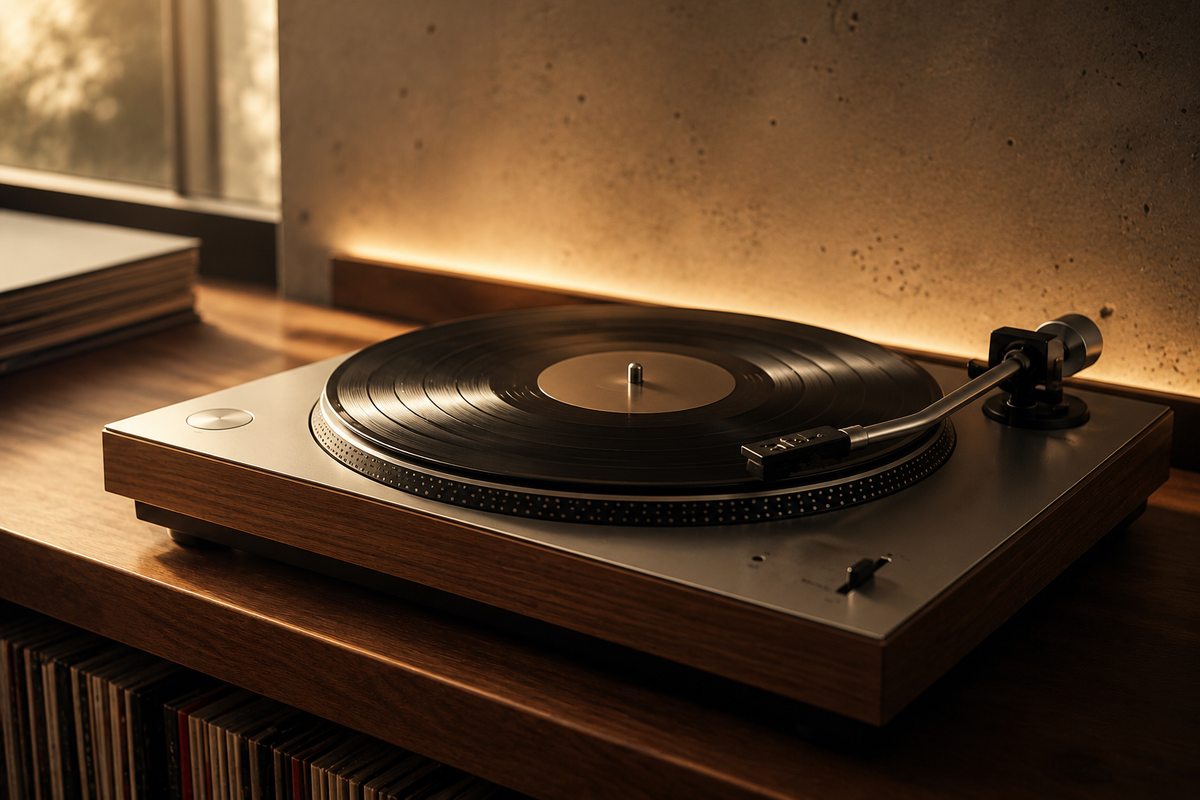
We often fall in love with music long before we understand what it is trying to tell us.
Many of the songs we grow up with arrive without their full meaning attached. They come through radios, family kitchens, weddings, summer playlists, television performances, TikTok edits, YouTube recommendations, Spotify algorithms, and other people’s nostalgia before they ever come through translation. I think that is how many of us in Slovakia and Poland first fell in love with music from abroad. We did not always know what the words meant. Sometimes we barely understood English, let alone French, Spanish, or Italian. But that never stopped us, because music rarely asks for permission from the dictionary before it enters the body. We heard a melody we loved, a voice that sounded like velvet, a chorus that seemed to come from some warmer, more glamorous world than our own, and that was enough. We danced first and translated later — sometimes years later, sometimes decades later, sometimes only after the song had already become part of our emotional furniture.
I am twenty years old, which means my relationship with music is not chronological in the way it was for older generations. I did not discover songs in the order they were released. My generation can hear a new Billie Eilish song in the morning, a Chappell Roan chorus in the afternoon, a random 2010s dance hit while scrolling, and a French classic from 1987 before going to sleep. Streaming collapsed musical time. For us, 1983, 2000, 2013, and 2026 can exist in the same playlist without feeling strange. A song does not feel old because of its release date. It feels old only when it can no longer reach us.
And many older songs still reach us. That is the interesting part. They come back through trends, edits, covers, family memory, nostalgia accounts, old music videos, and algorithmic accidents. We inherit them without inheriting the full context. We know the chorus before we know the story. We know the aesthetic before we know the wound. So when I write about older songs, I am not writing as someone who lived through their first cultural moment. I am writing as someone who found them later, after they had already become part of the atmosphere. That distance matters. It means I can love them first as mood, then return to them as text.
This is not only something that happened with songs from the 1980s, 1990s, or early 2000s. It still happens now, only faster. A song becomes a TikTok sound, a meme, a caption, a dance, a transition, a mood, and only later, if ever, do people sit with what it is actually saying. Contemporary pop is full of these beautiful traps. Billie Eilish’s “Lunch” can move through the internet as a playful, catchy moment, while also being a direct song about desire, queerness, and self-recognition. The Weeknd can make numbness and self-destruction sound like neon. Olivia Rodrigo’s “Vampire” can be consumed as dramatic heartbreak while carrying a much colder story about manipulation, power, and emotional extraction. Doja Cat can turn public hatred into a hook so catchy that people repeat the persona without asking what kind of projection created it.
And then there is Lana Del Rey, probably the most useful modern bridge to the older examples because her early work does not give us a clean moral surface. Songs like “Lolita” and “Off to the Races” live in a controversial space where youth, glamour, danger, older men, dependency, performance, and self-mythology blur together. Some listeners read it as character and critique. Others hear romanticization. That tension is exactly why she belongs here. She shows how pop can make an uncomfortable image beautiful enough that people argue over whether they are looking at a wound, a costume, a fantasy, or a warning.
That is why going back to Vanessa Paradis and Alizée still makes sense to me. I am not treating them as random old songs. I am looking at an older layer of the same cultural habit: the way pop can make youth look like style, discomfort look like charm, and projection look like innocence.
French sounded like perfume. Spanish sounded like summer. Italian sounded like cinema, balconies, soft shirts, and impossible romance. English sounded like the West itself, like something larger and freer than the world we knew from our own streets, kitchens, buses, school corridors, and family radios. Maybe we did not understand a single line, but we understood the temperature. We understood the mood. We understood the promise of another life. That was the dangerous part, and also the beautiful part, because sometimes not understanding makes a song even more powerful. It leaves space for projection. It lets us pour our own longing into someone else’s words.
The older I get, the more I realize that this fog does not belong only to foreign languages. Even native speakers can miss the meaning of songs written in their own language, because understanding words is not the same as reading with attention. Hearing a sentence is not the same as receiving it. Sometimes the lyrics are right there, perfectly available, and still people only catch the glitter, not the wound. A song can be in a language you speak fluently and still pass through you like weather. You can sing every word in the right place, with perfect timing, and never once ask what you are actually saying. The chorus becomes muscle memory. The sadness becomes a hook. The criticism becomes a vibe. Someone’s trauma becomes background music for a car ride, a party, a wedding, or a kitchen cleaned at midnight.
A perfect example is Sting’s “Every Breath You Take.” For years, people have treated it like one of the great romantic songs, the kind of thing that sounds almost tender if you only listen to the surface. But when you actually read the lyrics with attention, it becomes something else entirely. It is not really a love song. It is surveillance dressed as devotion. It is obsession using the language of romance. The melody is so elegant, so calm, so emotionally polished that it almost tricks you into missing the discomfort underneath. And that is exactly the point: sometimes the most misunderstood songs are not misunderstood because they are foreign. They are misunderstood because they are too beautiful for people to suspect them.
So maybe the real problem is not translation. Maybe the real problem is attention. A song can be about grief, loneliness, absent fathers, addiction, shame, politics, surveillance, obsession, manipulation, power, self-destruction, or the uncomfortable sexualization of teenage girls, and people will still dance to it with complete confidence, smiling as if they understand everything. The ignorance is almost innocent until it is not. We fill in the blanks with our own emotions. We do not know the context, so we invent one. And sometimes, even when the context is available, we still prefer the surface, because the surface is easier to love. It asks less from us. It lets the song remain beautiful without becoming complicated.
Vanessa Paradis was fourteen when “Joe le Taxi” came out in 1987 and became a phenomenon. To many listeners outside France, it was simply charming: a sweet voice, a playful melody, a little French dream. But that charm is also the trap. When a song arrives through atmosphere before language, the listener can turn it into whatever they need it to be. It becomes Paris, youth, style, innocence, glamour — even when the actual song is more specific than the fantasy we build around it. People did not necessarily receive the story. They received the postcard. And postcards travel faster than meaning.
The same happened with Alizée’s “Moi… Lolita,” released in 2000, when she was sixteen. On the surface, it was catchy, pretty, flirtatious, almost too perfectly made for European pop memory. But when you read the lyrics carefully, line by line, it becomes much sharper. Mylène Farmer did not write an empty pop song. She wrote something controlled, double-edged, full of performance and discomfort. It plays with the image of the young girl as fantasy, projection, object, and mirror. It touches that ugly cultural habit of looking at youth and pretending the gaze is harmless.
But if you do not read deeply, you miss it. Even if you know the words. Even if the song is in your language. That is what people forget: literacy is not the same as interpretation. We can technically understand every word and still misunderstand the whole thing. We can know vocabulary and miss irony. We can hear confession and treat it as decoration. We can turn someone’s carefully written pain into background noise for a party, because music is strange like that. It can carry a wound inside a melody so beautiful that we do not notice the blood.
And it was not only French. Spanish and Italian songs lived in our rooms too. They came with warmth already built into them, with vowels that felt like sun on skin. A Spanish chorus could make a Slovak kitchen feel like July near the sea. An Italian love song could turn an ordinary radio evening into something almost cinematic. We did not always know whether the singer was begging, grieving, seducing, accusing, remembering, or saying goodbye forever. We just knew it sounded beautiful. Sometimes that was enough. Sometimes it was not, because beauty can hide almost anything. A melody can make sadness look elegant. A voice can make longing feel like decoration. A foreign language can protect a song from being fully understood, and maybe that is why some songs travel so well. They arrive stripped of their burden. They become pure mood.
Stromae’s “Papaoutai” is the perfect example of a song that moves like the dance floor but aches like childhood. The title means, “Dad, where are you?” It is about absence, fatherhood, and the strange inheritance of emotional emptiness. But the beat moves. The chorus sticks. The body says yes before the mind has time to sit with the wound. That contrast fascinates me, because it shows how easily sadness becomes viral when it is dressed well enough. Give pain the right rhythm, the right styling, the right hook, and suddenly everyone can carry it without realizing how heavy it is.
Maybe we should not be too cruel about that. Not every person comes to music through analysis. Some people enter through hips, through nostalgia, through alcohol, through cleaning the kitchen, through old radio, through the first time they felt beautiful in a room where nobody was looking too closely. A song does not need to be understood to be loved. Sometimes love comes first, and maybe that is not a failure. Maybe that is simply how art survives distance. It reaches us before we are ready to understand it.
But love should not always be the final form of listening. There is another pleasure that comes later: the second listening, the adult listening, the moment you return to a song and realize it was not nonsense. It was not just cute. It was not just catchy. It had bones. It had teeth. It was saying something precise while everyone was busy dancing over it. As someone born after many of these songs had already become classics, I experience them twice: first as inherited nostalgia, then as text. First as atmosphere, then as revelation.
Maybe that is what we could do more often, not only with music, but with everything we consume too quickly. We could return. We could read again. We could stop treating beauty as proof that nothing complicated is happening underneath. We could admit that the first emotional reaction is real, but it is not always complete. Loving a song through its surface is human. Returning to it with attention is respect.
I open the lyrics and suddenly the song changes shape. What used to feel light now has weight. What seemed playful becomes strange. What sounded innocent reveals sharp edges. The melody stays exactly the same, but I am no longer the same listener. And maybe that is the real point. We fall in love with things before we understand them: songs, people, languages, places, versions of ourselves. Only later do we learn how to listen properly. Not just to translate. Not just to recognize the words. But to read with attention, because meaning does not always hide behind a foreign language. Sometimes it hides in plain sight, inside a chorus everyone knows by heart.
And maybe this is not only about songs. Maybe this is about life too. About how often we judge the cover, the chorus, the first impression, the prologue someone accidentally shows us before we know the whole story. We think we understand a person because we caught their surface: their tone, their style, their mistakes, their silence, their confidence, their softness, their defensiveness, their beauty, their awkwardness. But a surface is not a biography. A first impression is not the whole translation. Sometimes we are only hearing the melody of someone, not the meaning.
And maybe the more decent thing, the more human thing, is to admit that understanding takes attention. It takes patience. It takes returning. Because people, like songs, can be terribly easy to misread when we only listen for the part that is easiest to sing along to.