The Inheritance of Mothers
On Mother’s Day, I think about my mother not only as the woman who raised me, but as a daughter shaped by daughters before her.

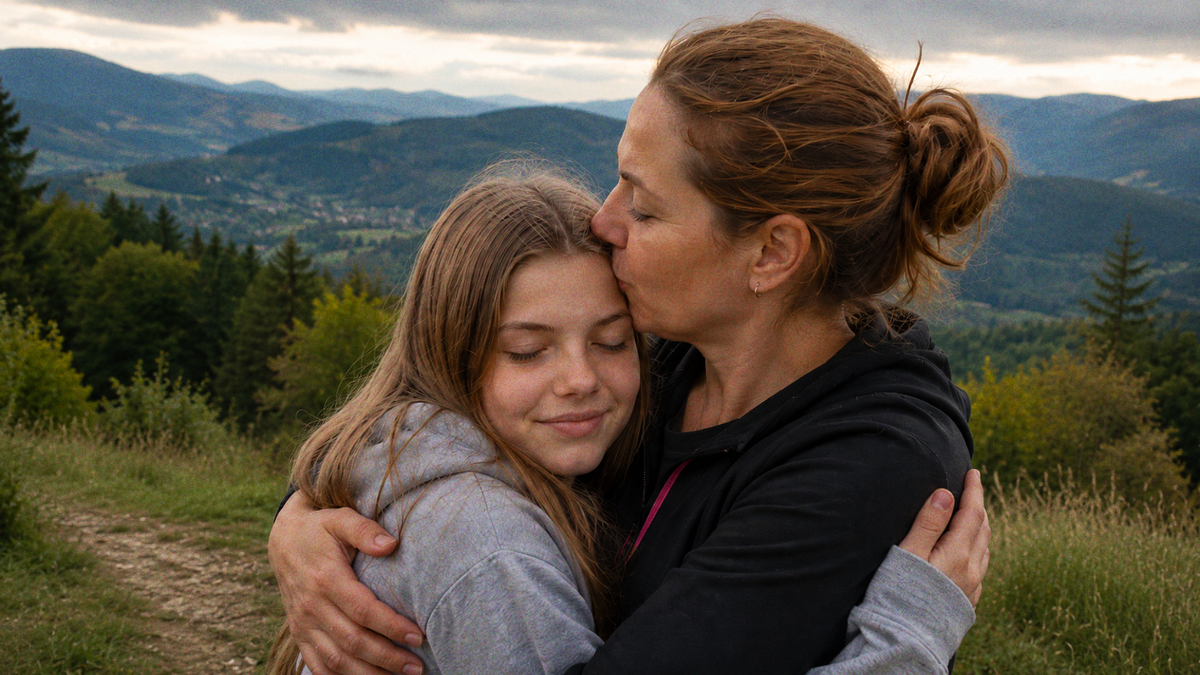
Maybe love does not evolve by cutting ourselves away from our mothers, but by continuing them differently.
There is a strange tenderness in thinking about mothers on Mother’s Day, because the day asks us to celebrate something that has never been simple. It turns a whole history of bodies, rooms, kitchens, warnings, sacrifices, milk, fear, tired hands, unspoken apologies and inherited ways of loving into one neat public ritual, as if motherhood were something clean enough to fit inside flowers, breakfast in bed, a card, a photograph, a sentence that begins with thank you and somehow manages to carry everything. But motherhood is not clean. It is not only softness. It is not only devotion. It is not only the woman who held us when we were small. A mother is also the woman who carried everything before us: her own childhood, her own mother, her grandmother, the rules of the house she grew up in, the fears she inherited before she had language for them, the ways of loving that were taught to her so early they became instinct in her hands. Sometimes those instincts were gentle. Sometimes they were not. Sometimes they protected. Sometimes they repeated what should have ended long ago. And still, underneath all of that, there was a woman trying to love with the tools she had been given.
I do not want to look at motherhood with accusation. I do not want to say, my mother did this wrong, or she should have known better, or I will be nothing like her, because that feels too easy, too sharp, too clean. Real life is not clean. Real motherhood is made of love and exhaustion, history and survival, tenderness and fear, the best intentions sometimes wrapped in old language. My mother was also someone’s daughter. She also learned love from a woman who learned it from another woman, who learned it from another woman before her. Each generation passed something forward, not always because it was good, but because it was familiar. Because it was what they knew. Because no one had yet shown them another way. That does not mean everything should be excused. It means everything should be understood before it is judged, because behind every mother there is a girl who once had no power over the world she was born into.
And maybe that is what Mother’s Day should make us brave enough to see. Not only the mother as the almost-mythical figure of comfort, not only the woman who cooked, cleaned, worried, protected, sacrificed, stayed awake, remembered birthdays, noticed fevers, packed food, corrected collars and called too often, but the woman before she became our mother. The woman who once wanted things. The woman who was once misunderstood. The woman who may have been softer before the world trained her into caution. The woman who may have had to become practical because nobody gave her permission to be fragile. The woman who may have confused control with care because in her world, control was sometimes the only available form of safety. A mother is not born outside history. She is made inside it.
So when I imagine having a daughter one day, I do not imagine cutting myself away from the women before me. I imagine continuing them differently. I want to raise my daughter the way I wish I had been raised in the places where I needed more softness, more freedom, more trust. Not because my mother failed me, but because every daughter carries a small private map of what she would keep and what she would change. I think that is how love evolves. Not through rejection, but through refinement. Through saying: this part nourished me, I will preserve it. This part hurt me, I will soften it. This part was fear, I will try to translate it into trust. This part was silence, I will try to give it language. This part was shame, I will try not to pass it forward as inheritance.
I will probably be more liberal than my mother. More progressive. More open in the way I speak about the body, about shame, about freedom, about choices, about the right to become yourself without being punished for it. I want my daughter, if I have one, to grow up knowing that her body belongs to her, that her voice matters, that mistakes are not the end of love, that obedience is not the same thing as goodness, that fear should not be mistaken for morality. I want her to know that she does not have to shrink herself in order to be loved, and she does not have to perform innocence in order to deserve protection. But I also know that, in her time, my mother was probably more liberal than my grandmother. And my grandmother, in her own quiet way, may have been braver than the women before her. We like to imagine growth as rebellion, as one woman finally breaking away from everything that came before, slamming the door behind her and calling that freedom. But maybe growth is often slower than that. Maybe it is a river moving through many bodies. Each woman carrying the water a little further. Each daughter becoming slightly freer than the mother who loved her.
That thought humbles me, because one day, if I have a daughter, she may look at me and think I do not understand. She may roll her eyes at my advice. She may feel suffocated by my concern. She may believe I am holding her back when all I am trying to do is keep the sharpest parts of the world from touching her too soon. And maybe she will be right, at least sometimes. Maybe I will also make mistakes. Maybe I will protect too much, speak too quickly, worry too loudly. Maybe the things I call care will sometimes feel like pressure in her hands. Maybe the freedoms I think I am giving her will one day seem limited to her, because by then the world will have moved again and she will stand somewhere I cannot yet imagine. I do not want to pretend that becoming aware of inherited patterns magically frees me from creating my own. Love does not make a woman automatically wise. Wanting to be different is not the same as being healed. A future mother is still human.
But I know I will be protective. Of course I will. How could I not be? If I carry a daughter inside my body, if I know her first as a flutter beneath my ribs, if I feed her, hold her, learn the exact weight of her sleeping head against my chest, how could I ever pretend the world does not frighten me? A mother’s protection begins in the body before it becomes language. It begins in the sleepless listening, in the hand hovering near the edge of the bed, in the instinct to check the blanket, the breath, the temperature, the silence. It begins before reason has time to organize itself into philosophy. It begins in the animal part of love, the part that does not ask whether worry is elegant, modern, progressive or psychologically refined. It simply reaches.
Once, mother and daughter were one body. That is not only poetry. It is an origin. A daughter begins beneath her mother’s heartbeat, formed in the private dark of her, held before she is named. Before she has opinions, before she has a face the world can recognize, before anyone calls her difficult or beautiful or clever or too much or not enough, she exists inside the body of another woman. And even after birth, even after the cord is cut and everyone says separation has begun, something remains. Not ownership. Not control. Not a right to decide who the daughter becomes. But memory. A deep, wordless recognition. The kind that says: I knew you before you knew yourself. The kind that can become tenderness, and sometimes tension, because closeness is never only simple. The same intimacy that allows a mother to know when something is wrong can also make a daughter feel too visible. The same protection that once saved can later feel like a hand on the door.
Maybe this is why the bond can feel so powerful, even when it is difficult. There is always something nevypovedané, nevyslovené, nenapísané between a mother and a daughter. Something unspoken, unsaid, unwritten. Sometimes it lives in a look. Sometimes in a phone call pretending to be about the weather. Sometimes in food packed for the road, in a scarf pushed into your hands, in a palm placed on your forehead long after childhood has passed. Sometimes love is not declared because neither woman knows how to say it without becoming too vulnerable. So it becomes action. Habit. Protection. A quiet devotion that does not ask to be praised. The mother asks whether you ate. The daughter says yes, even if she did not. The mother hears something in the voice anyway. The daughter pretends to be annoyed, and still answers the phone.
My mother breastfed me for a long time, and the older I become, the more grateful I am for that. Not as a perfect rule. Not as a measure of motherhood. Not as something every woman must do, because every woman has her own body, her own circumstances, her own limits, her own truth. But when I think of what she gave me, I feel something tender and almost ancient. She gave me time. She did not hurry that first intimacy away. She let me stay close to her body, nourished and held, for longer than the world often allows. There are things I want to change when I become a mother, yes, but there are also things I want to keep, and this is one of them. If I can, if my body allows it, if it is good for both of us, I want my daughter to know that same slow safety. I do not want to detach her from the breast too early just because the world is impatient with dependence. I want to honor the season of needing. The soft, sacred time when a child’s whole world can still be warmth, skin, milk, breath, heartbeat.
Because children separate from us anyway. They do not need to be rushed into distance as proof that we are raising them well. One day they stop reaching for the same things. One day they close the door. One day they say, I can do it myself. One day the little body that once fit completely against yours becomes a girl with her own thoughts, then a woman with her own secrets, her own hunger for life, her own roads to walk. Separation will come. It is the law of love. But maybe the beginning does not have to be a rehearsal for leaving. Maybe the beginning can be full. Patient. Close. A place where a daughter learns that needing is not shameful and closeness is not weakness. A place where dependence is not treated as failure, but as the first language of trust.
I think about that especially on Mother’s Day, because this day is often covered in a kind of forced simplicity. We are told to say thank you, and of course we should. But a real thank you is not always small enough to fit inside a pretty sentence. Sometimes gratitude arrives late. Sometimes it takes years to understand what your mother was doing when she worried too much, when she repeated herself, when she gave advice you did not want, when she packed food you insisted you did not need, when she saw danger in places where you only saw life. Sometimes what felt like pressure at sixteen becomes legible as protection later. Sometimes what felt embarrassing becomes touching. Sometimes you realize that love was speaking through fear because fear was the language she inherited. And sometimes you can be grateful without pretending nothing hurt. That is the part people do not always know how to hold. Gratitude does not require amnesia. Love does not require a daughter to erase herself.
I think about my mother not only as my mother, but as a woman shaped by other women. I think about how much she protected me, even when I experienced it as pressure. I think about how much of her worry was love wearing the clothes of fear. I think about the things she gave me that I only understood later, the things I resisted, the things I now carry in my own hands without even noticing. We become our mothers in small, almost ridiculous ways before we become them in serious ones. A gesture. A sentence. A way of folding fabric. A look given across a room. A tone used when someone we love is being careless with themselves. And then one day we hear ourselves say something and recognize the echo. Not always with horror. Sometimes with tenderness. Sometimes with the strange shock of realizing that inheritance is not only trauma. Sometimes inheritance is also competence. Warmth. Endurance. The ability to notice. The refusal to let someone leave hungry.
And I think about the daughter I may one day have. I want to be softer with her than the world will be. I want to give her freedom without abandoning her to it. I want her to know that she can come to me with the ugly truth, not only the version of herself that is easy to love. I want her to know that her body is not a battlefield where other people get to plant flags. I want her to know that tenderness is not obedience, that beauty is not debt, that being loved should not feel like being owned. I want to protect her, yes, but I want my protection to have windows. I do not want it to become a locked room. I want to be a place she can return to, not a place she has to escape from.
That is the difficult balance, maybe the hardest one: to protect a daughter without making fear the architecture of her life. To teach her caution without teaching her shame. To warn her about the world without making the world feel like punishment for being alive. To give her roots without tying her down. To let her become someone I did not design. It sounds beautiful when written like that, but I know it will not always feel beautiful in practice. There will be moments when fear will be louder than trust. There will be moments when I will want to hold on too tightly. There will be moments when my own inherited anxieties will rise before my principles have time to speak. That is why I do not want motherhood to be a fantasy of perfection. I want it to be a practice of consciousness. A daily act of noticing what is mine, what was given to me, what I do not want to pass forward untouched.
Maybe this is the work of every daughter who becomes a mother: to stand between past and future with open hands. To receive what was given. To bless what was warm. To grieve what was painful. To choose again. Not perfectly. Never perfectly. But consciously. To understand that every generation has its own blindness, and that our daughters may one day have to forgive us for what we could not yet see. This does not make the work pointless. It makes it human. We are not building a perfect lineage. We are making small repairs in the fabric while still wearing it.
The mother-daughter bond is not simple because women are not simple. We are made of our mothers and our refusals, our inheritances and our corrections, our tenderness and our storms. We love through the things we cannot say. We misunderstand each other and still recognize each other. We carry each other in the body long after the body has changed. A daughter leaves, and still something in the mother listens. A mother ages, and still something in the daughter turns toward her. Even when there is conflict, even when there is distance, even when love has had to become careful, there is often a line beneath the visible story, a line made of origin, memory and all the unsaid things neither woman has fully learned how to translate.
And maybe that is enough for Mother’s Day. Not a perfect thank you. Not a polished story. Not a sentimental lie. Just this: I see you. I see what you carried. I see what you tried to give me. I see the women behind you, and the women behind them. I will keep what was warm. I will soften what was hard. I will not pretend I can begin from nowhere. I will not turn inheritance into a prison, but I will not deny that it lives in me. I will love forward.
And somewhere, in that invisible place where mothers and daughters remain connected, something answers without words.